
How to Cook a Fresh Thanksgiving Turkey Without Overcooking It
You bought a better turkey. The goal now is simple: don’t overcook it.
At Prescott Meat Company, we bring in fresh Joyce Farms Naked Turkey and Heritage Black Turkey for Thanksgiving. Both offer a noticeably different eating experience from commodity grocery-store turkey.
The cooking method should stay simple. Season the bird well, roast it steadily at 325°F, start checking the temperature early, and take it out when it’s done.
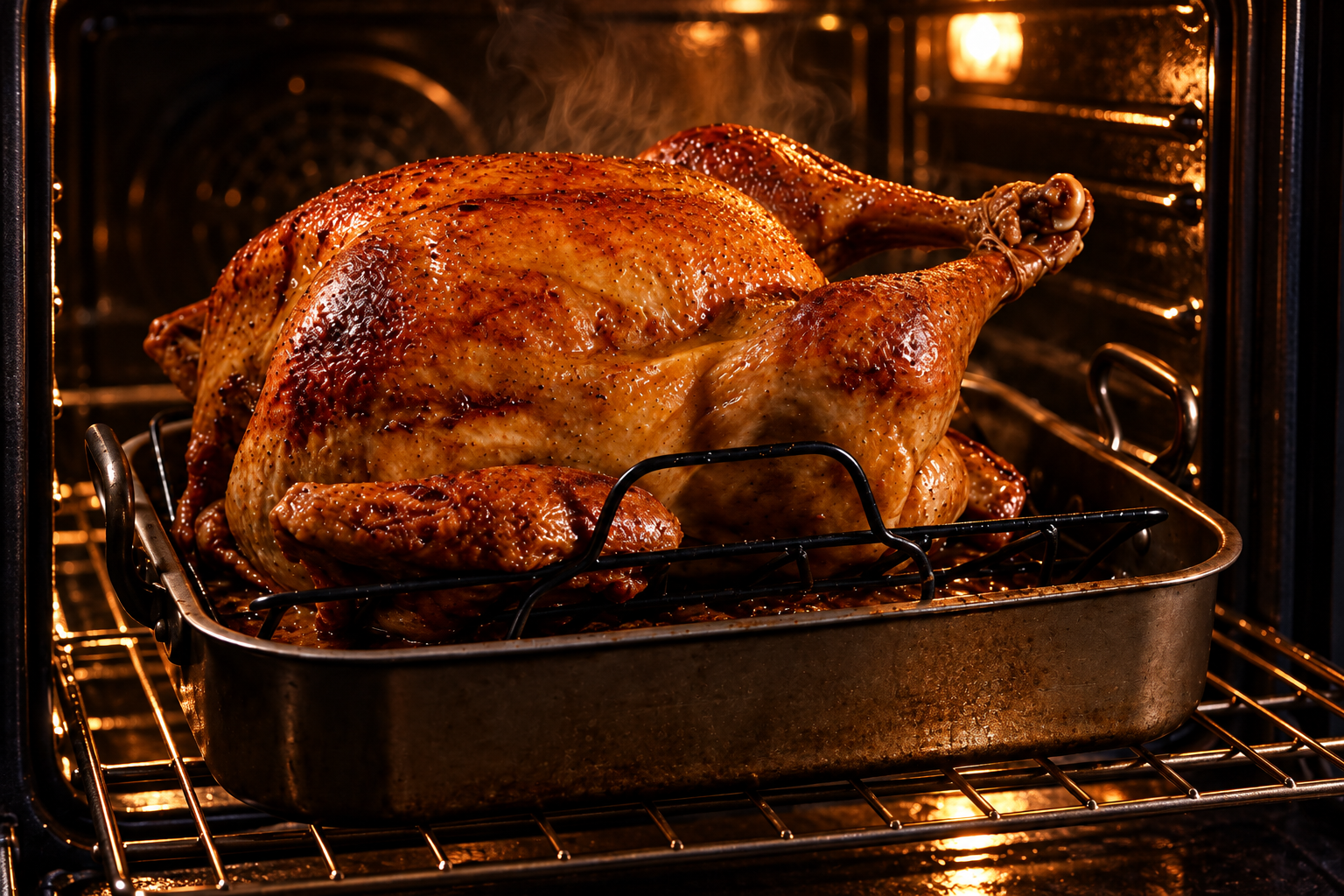
How Long Should You Cook a Thanksgiving Turkey?
Roast a fresh whole turkey at 325°F and use internal temperature—not cooking time alone—to determine when it is done.
For a 16-pound Naked or Heritage Black Turkey, start checking the internal temperature after about 2 hours. Total cooking time may be approximately 2–3 hours for a bird of that size, but use the thermometer rather than the clock to judge doneness.
For the smaller 10–14 pound birds we sell, we recommend starting the temperature check a little earlier.
Fresh Thanksgiving Turkey Cooking Guide
| Turkey Size | Oven Temperature | First Temperature Check | Safe Internal Temperature | Rest Before Carving |
|---|---|---|---|---|
| 10–14 lb | 325°F | About 1½ hours | 165°F minimum | 20–30 min |
| 16–20 lb | 325°F | About 2 hours | 165°F minimum | 20–30 min |
Checking early does not mean the turkey will be done that early. It gives you a baseline and helps prevent the breast from cooking past where you want it.
If the turkey needs more time, keep roasting and check it again periodically.
Cooking time varies with the bird, oven, roasting pan, starting temperature, and other factors. A 16-pound turkey, for example, may finish in approximately 2–3 hours at 325°F. Your turkey may need more or less time.
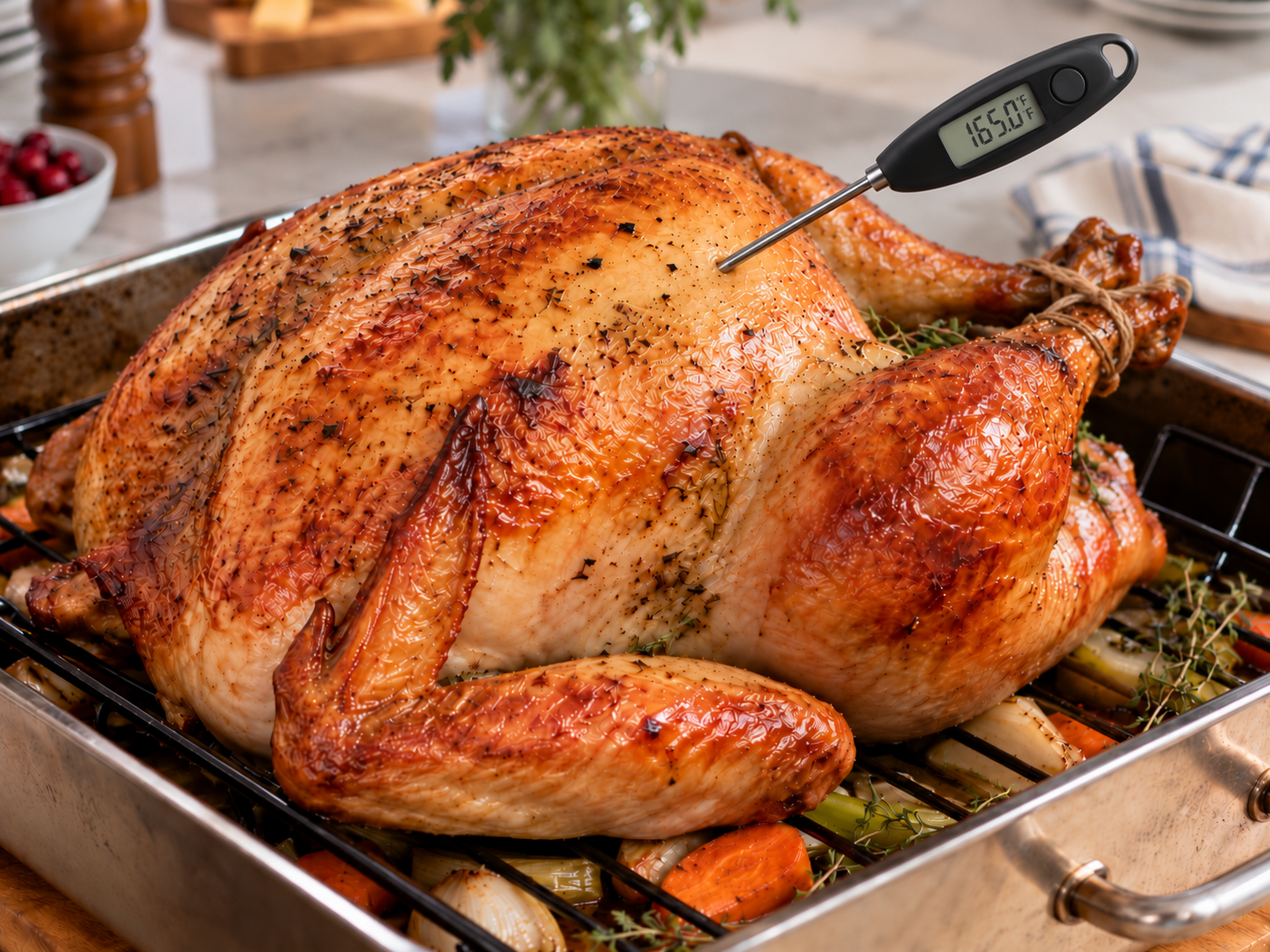
Check the thickest part of the breast, innermost thigh, and innermost wing. Each must reach at least 165°F. Aim for 165°F in the breast; thighs and drumsticks generally become more tender around 175–180°F.
These instructions are for a turkey that is not packed with bread stuffing. We recommend loosely filling the cavity with citrus, onion, and fresh herbs instead.
The clock helps you plan Thanksgiving dinner. The thermometer tells you when the turkey is done.
Naked Turkey vs. Heritage Black Turkey
Naked Turkey gives you pronounced natural turkey flavor with a more familiar Thanksgiving texture, while Heritage Black delivers deeper flavor and the firmer texture of a slow-growing heritage breed.
Both are a serious departure from commodity turkey. They simply give you two different eating experiences.
| Naked Turkey | Heritage Black Turkey | |
|---|---|---|
| Flavor | Pronounced natural turkey flavor | Deeper, more traditional turkey flavor |
| Texture | Familiar Thanksgiving texture with better eating quality | Firmer heritage-breed texture |
| Breed | Modern domestic turkey | Slow-growing heritage breed |
| Eating Experience | Familiar, but noticeably different from commodity turkey | More distinct heritage flavor and texture |
| Best For | Families who want an exceptional version of the Thanksgiving turkey they know | People who want to experience what heritage breed turkey tastes like |
Joyce Farms Naked Turkey
Naked Turkey delivers real turkey flavor while keeping the Thanksgiving experience familiar.
Joyce Farms raises its Naked Turkey under its Nothing Added Ever standards. These birds are not injected, marinated, or pre-brined to manufacture flavor.
For someone who wants a turkey that feels familiar on the Thanksgiving table but tastes noticeably different from commodity turkey, this is an excellent choice.
Joyce Farms Heritage Black Turkey
Heritage Black Turkey takes you further into the flavor and texture that come from traditional turkey genetics.
It is a slow-growing heritage breed with deeper turkey flavor and a firmer texture.
If you want to understand why breed matters, Thanksgiving is a pretty good way to taste it.
Heritage Turkey vs. Regular Turkey: What’s the Difference?
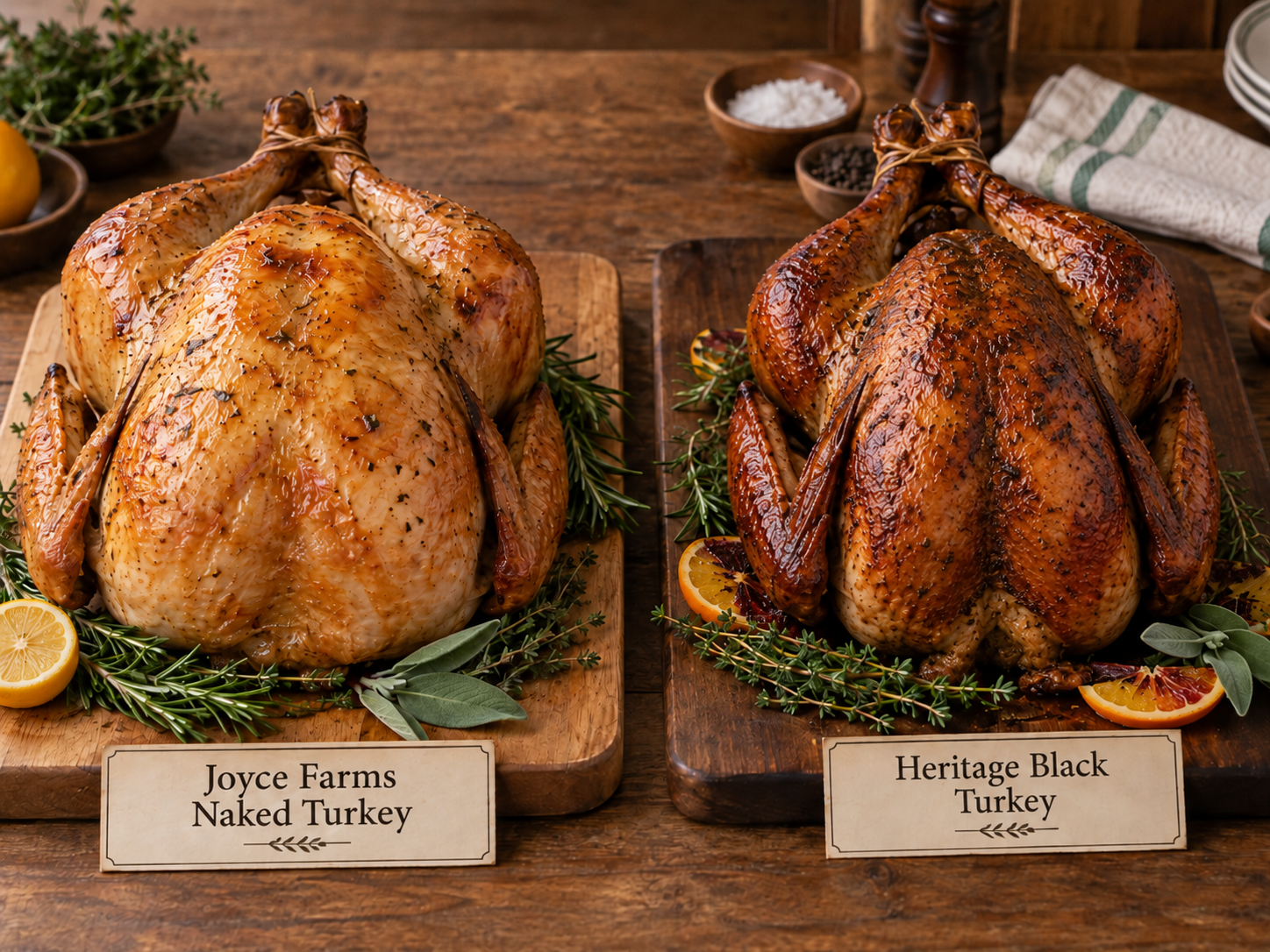
Which Thanksgiving Turkey Should You Buy?
Choose Naked Turkey if you want exceptional turkey flavor with a more familiar texture. Choose Heritage Black if you want deeper flavor and a more traditional heritage-breed eating experience.
Prescott Meat Company offers Thanksgiving turkeys in 10–14 pound and 16–20 pound sizes.
Not sure which size you need?
How Much Turkey Do I Need Per Person?
Call us. Tell us how many people you are feeding and which turkey you are considering. We will help you choose the right bird.
Reserve Your Fresh Thanksgiving Turkey
You can also call us at (928) 237-5694.
How to Cook a Fresh Whole Turkey
Our preferred method is herb butter under the skin, citrus and fresh herbs in the cavity, and a steady roast at 325°F.
It is a straightforward way to let the flavor of a good turkey come through without making the process more complicated than it needs to be.
Good turkey should still taste like turkey.
1. Start With a Fresh Turkey
Prescott Meat Company’s Thanksgiving turkeys arrive fresh, so there is no thawing required.
Keep the turkey refrigerated until you are ready to cook it. Remove the bird from the packaging and take the neck and giblets out of the cavities.
Save them if you are making gravy.
Pat the turkey dry with paper towels before seasoning.
2. Use Herb Butter Under the Skin
Herb butter seasons the breast meat directly while complementing the natural flavor of the turkey.
We like the herb butter approach used by Joyce Farms: butter, parsley, thyme, sage, garlic, lemon zest, seasoning, and dry white wine. Working it beneath the breast skin adds flavor and helps protect the delicate white meat during roasting.
Gently loosen the skin over the breasts without tearing it. Spread the herb butter directly over the breast meat underneath the skin, then season the outside of the bird.
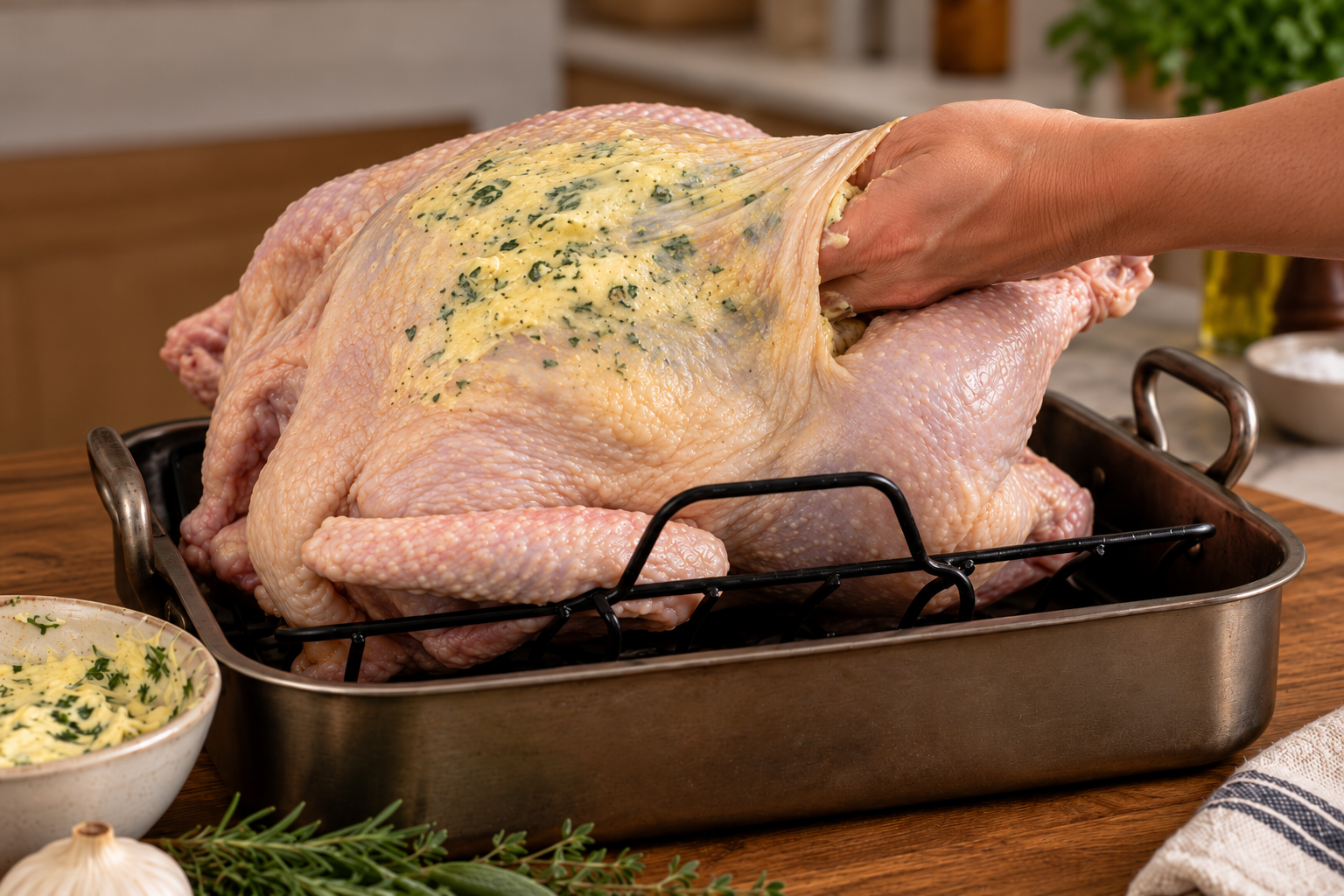
The goal is not to cover up the turkey. It is to put seasoning where it matters while letting the flavor of the bird remain the focus.
3. Add Citrus, Onion, and Herbs to the Cavity
Loosely fill the cavity with citrus, onion, and fresh herbs instead of packing the turkey with bread stuffing.
Orange, lemon, onion, and fresh thyme are a simple combination that works well with both Naked and Heritage Black Turkey.
Do not pack the cavity tightly.
We recommend cooking traditional bread stuffing separately. This gives you better control over both the turkey and the stuffing while letting the flavor of the bird remain the focus.
You bought a turkey with flavor. Let the turkey taste like turkey.
Ready for the Oven
With the herb butter tucked beneath the skin, the cavity loosely filled with aromatics, and the outside generously seasoned, your turkey is ready for roasting.
A little olive oil or melted butter on the skin helps the seasonings adhere and encourages a beautifully browned finish.
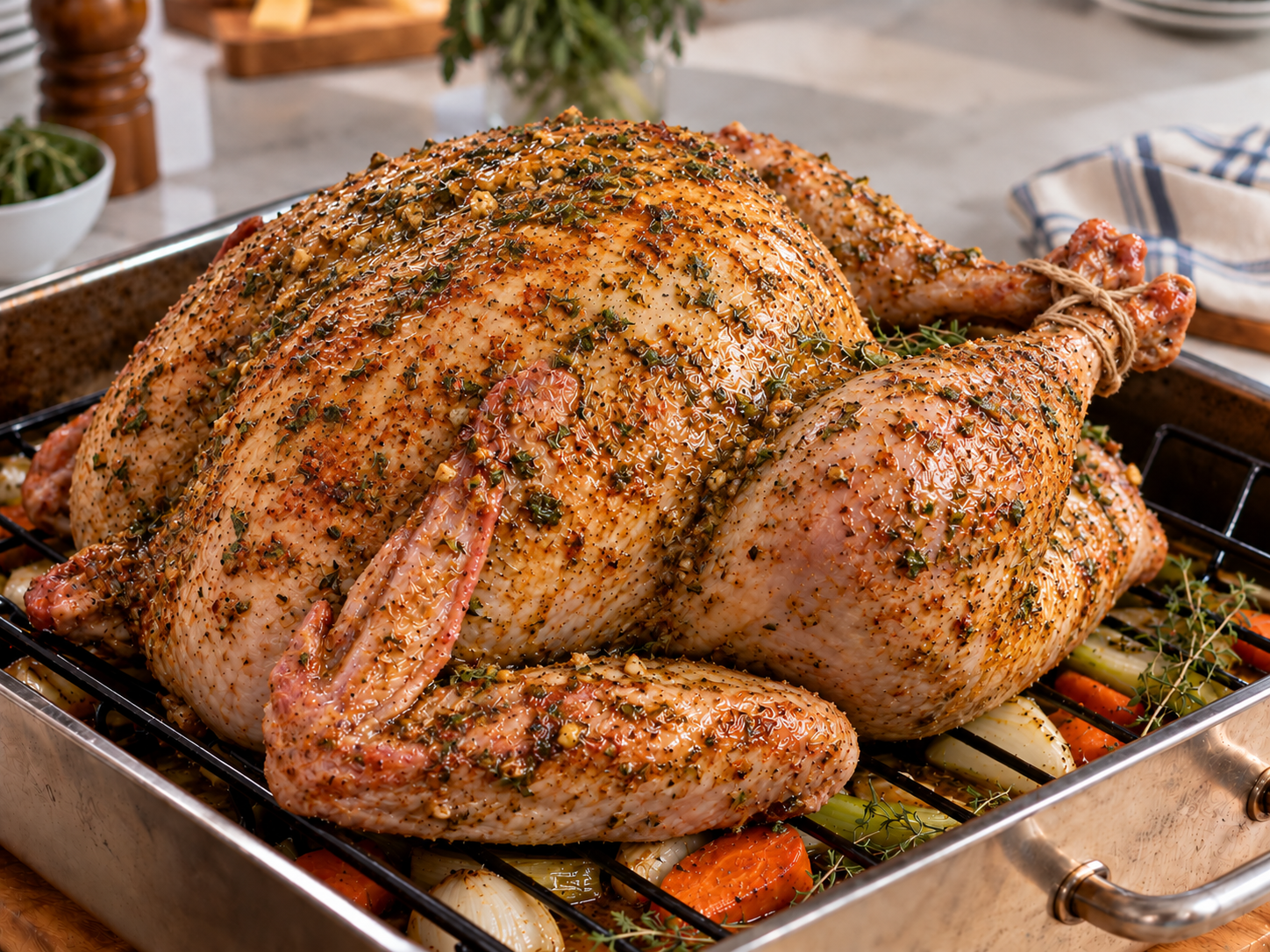
4. Roast at 325°F
Place the turkey breast-side up on a roasting rack and roast it in a preheated 325°F oven.
Tuck the wings underneath the bird and loosely tie the legs together with butcher’s twine.
If you are making gravy, save the neck and giblets for the roasting pan or your preferred gravy preparation.
Then let the oven do its job.
Constant basting is not necessary. Every time you open the oven, you release heat and make the cooking process less predictable.
5. Start Checking the Temperature Early
Start checking a 10–14 pound turkey at about 1½ hours and a 16–20 pound turkey at about 2 hours.
That does not mean we expect the turkey to be finished at the first check.
For a 16-pound Naked or Heritage Black Turkey, we recommend starting the temperature check at about 2 hours. With the smaller birds we sell, we would rather have you look early than discover the breast is already past where you wanted it.
If the turkey needs more time, keep roasting and check it again periodically.
There is no prize for guessing the exact cooking time. The goal is catching the bird when it is actually done.
6. Check the Breast, Thighs, and Drumsticks
The breast is lean, so aim for 165°F without cooking it much beyond that. A few degrees higher does not automatically ruin it, but the farther it cooks, the more moisture it loses.
Check both sides of the bird. Place the probe tip in the thickest center of the breast, the innermost thigh where it joins the body, and the thickest meat of the drumstick. Keep the tip away from bone and out of the cavity. Check the innermost wing as well; the breast, thigh, and wing must each reach at least 165°F.
Thighs and drumsticks are dark meat with more connective tissue. They are safe at 165°F, but generally eat better around 175–180°F as that tissue softens. Those higher temperatures are not overdone for dark meat, though legs can still dry out if cooked too far.
If the breast is browning too quickly, loosely shield it with aluminum foil. Foil slows browning but does not stop the breast from cooking. If the breast reaches 165°F before the legs are ready, you can remove the leg quarters and return them to the oven while the breast rests. Check their temperature again before serving.
7. Rest Before Carving
For this straightforward whole-bird method, pull the turkey when the breast reaches 165°F and the thigh and wing have also reached at least 165°F. Ideally, the thighs and drumsticks will be around 175–180°F for tenderness. Do not leave the finished breast in the oven just to push the legs higher.
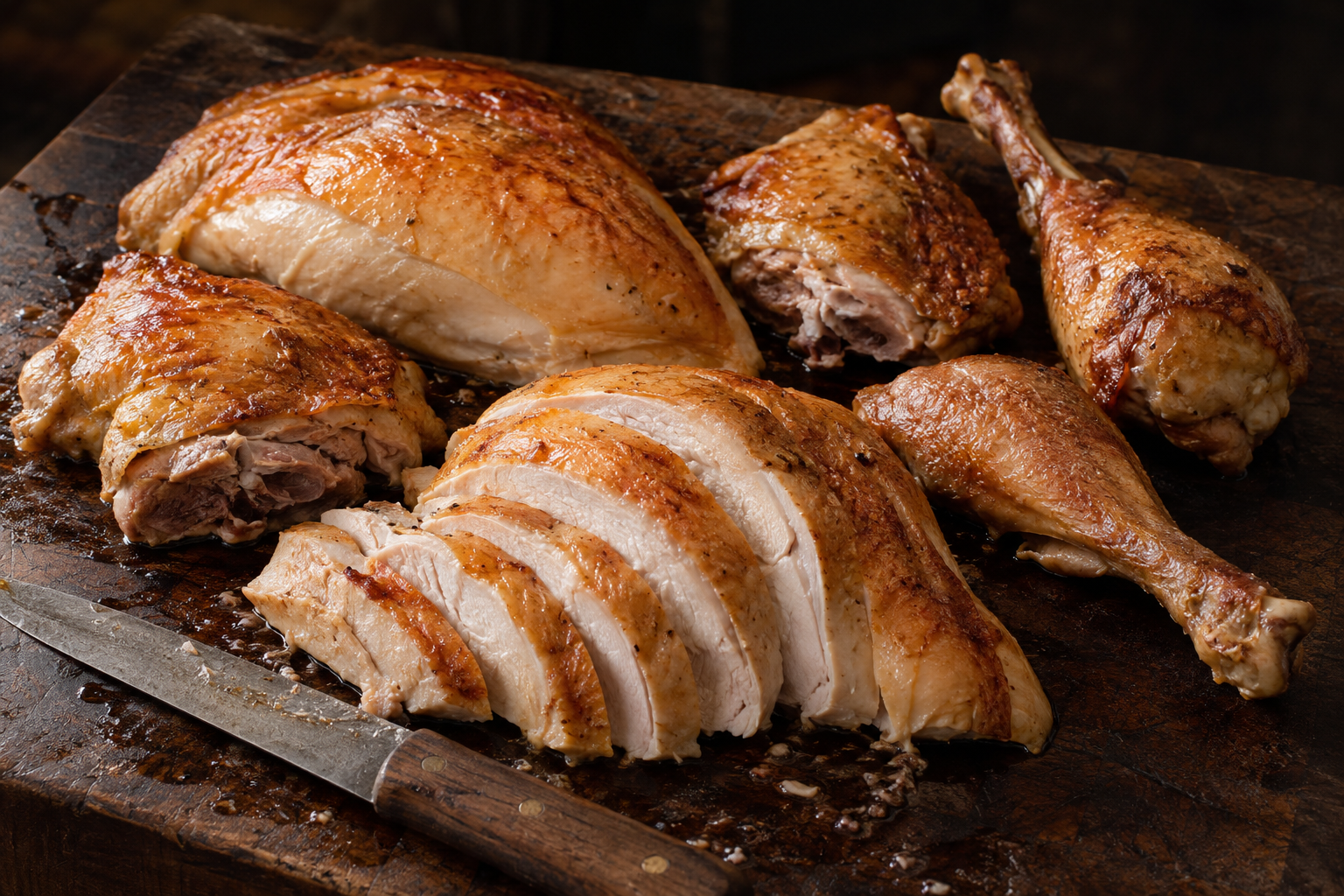
Carryover cooking matters with a whole turkey: heat continues moving inward after it leaves the oven. The temperature rise varies with the bird and cooking conditions, so do not assume a turkey pulled below 165°F will reach it during rest. Let the turkey rest for 20–30 minutes, loosely tented rather than tightly wrapped. Use that time to finish the gravy and warm the sides.
Then carve it and eat it.
Should You Brine Your Thanksgiving Turkey?
Brining is optional for both Naked and Heritage Black Turkey.
You do not need to brine either bird. If you prefer a brined turkey, you can use a 24-hour brine before following the roasting method above.
Otherwise, skip the brine and follow the cooking method above.
Why Does Heritage Black Turkey Sometimes Have Dark Spots on the Skin?
Small dark or bluish spots on Heritage Black Turkey skin can be natural pigmentation from its dark plumage.
This is normal for the breed and does not mean there is anything wrong with the turkey.
It is simply one of the visible differences you may notice when cooking a dark-feathered heritage bird.
Fresh Thanksgiving Turkey in Prescott, Arizona
Prescott Meat Company brings fresh Joyce Farms Naked and Heritage Black Turkeys to Prescott for Thanksgiving.
Our birds arrive fresh, so there is no multi-day thawing process to plan around. If you are unsure which turkey to buy, what size you need, or how to cook it, ask us.
That is part of what a butcher shop should do.
Better ingredients create better meals. A better eating experience starts here.
Reserve Your Thanksgiving Turkey
Or call Prescott Meat Company at (928) 237-5694.
Prescott Meat Company
715 E Gurley St
Prescott, AZ 86301
Frequently Asked Questions
Answers to questions we hear at the counter.