How to Cook Certified Piedmontese Prime Rib
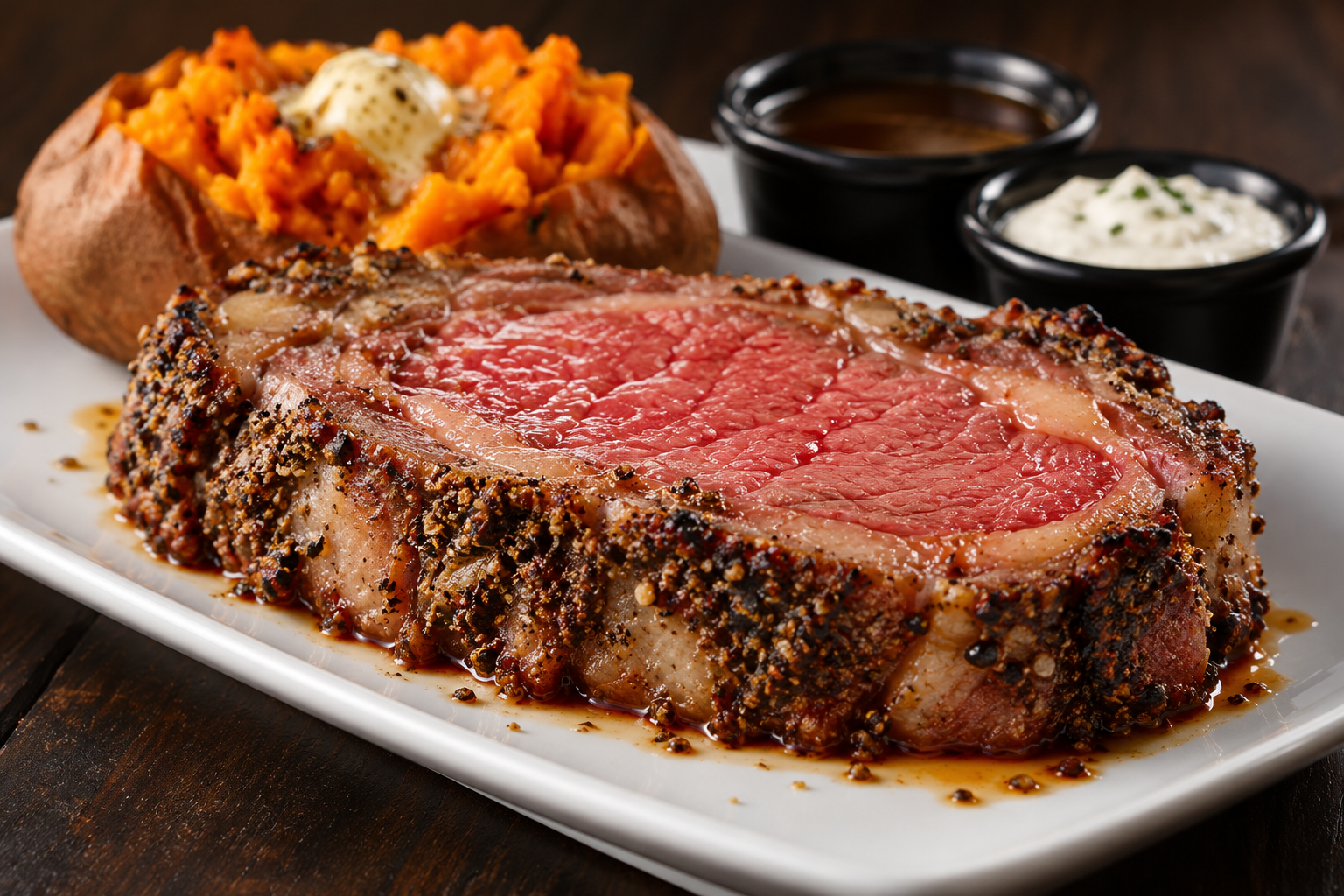
The best way to cook Certified Piedmontese prime rib is to start it at 475°F for 15–20 minutes, then lower the oven to 250°F and cook until the roast is 10°F below your target temperature. For medium-rare, we pull the roast at 115°F and let carryover cooking bring it toward a final temperature of about 125°F.
That’s the method we recommend at Prescott Meat Company: 475°F for the crust. 250°F for control. The thermometer decides when it’s done.
You spent good money on this roast. You’re probably cooking it for Christmas or another holiday meal with people you care about. Nobody wants to screw that up.
The good news is that you don’t need a complicated recipe. Give yourself enough time, use a good thermometer, and follow the method below.
Prime Rib Quick Reference
Salt: 24–48 hours ahead
Start: 475°F for 15–20 minutes
Finish: Lower oven to 250°F
Medium-rare: Pull at 115°F for a 125°F target
Cooking time: About 25–30 minutes per pound at 250°F
Rest: 20–30 minutes before carving
Use cooking time to plan. Use internal temperature to decide when it’s done.
Cooking Prime Rib for the Holidays?
Start with the beef we recommend.
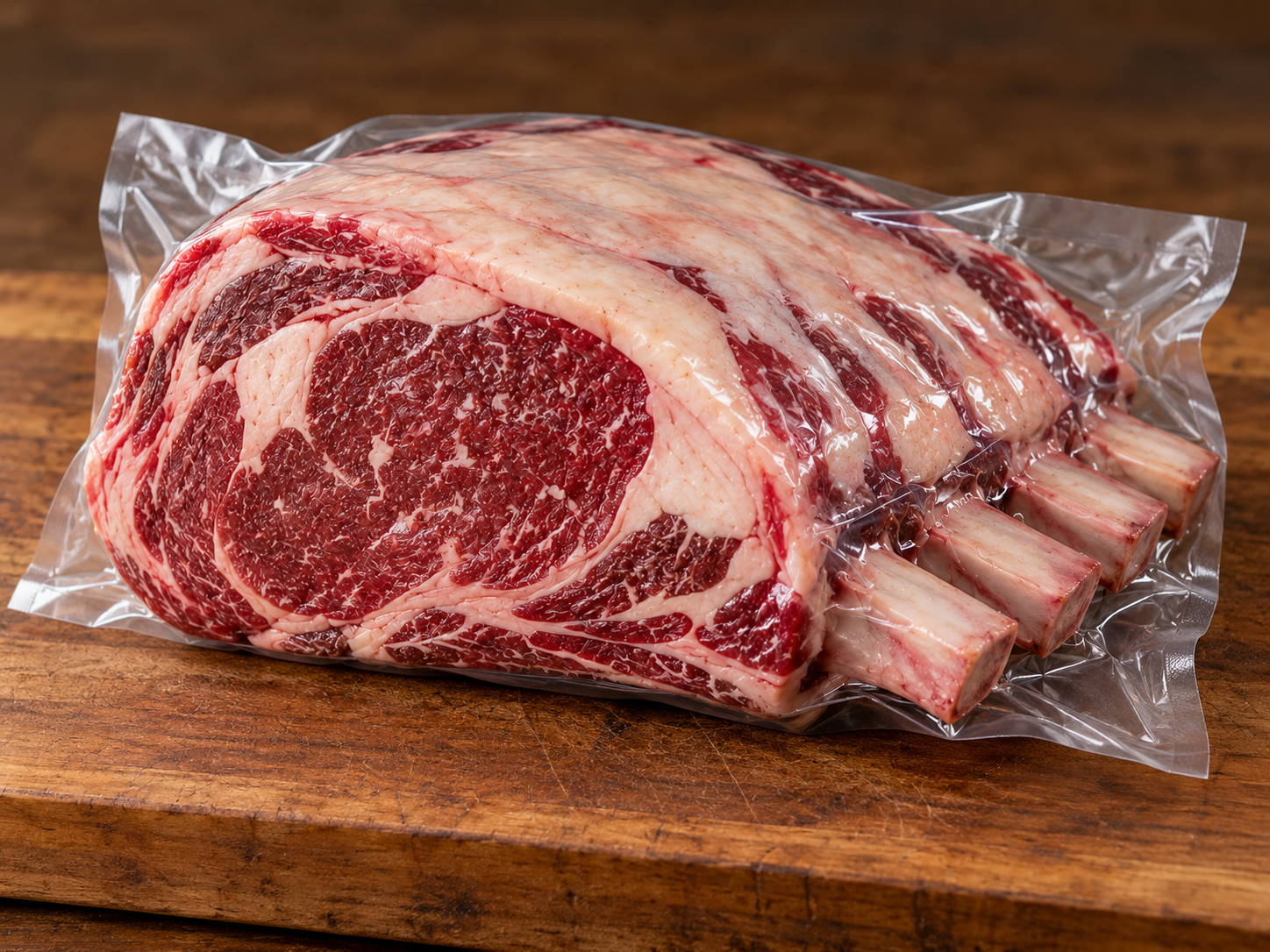
Holiday availability can vary. Order early or contact the butcher shop about current availability.
How Do You Cook Certified Piedmontese Prime Rib?
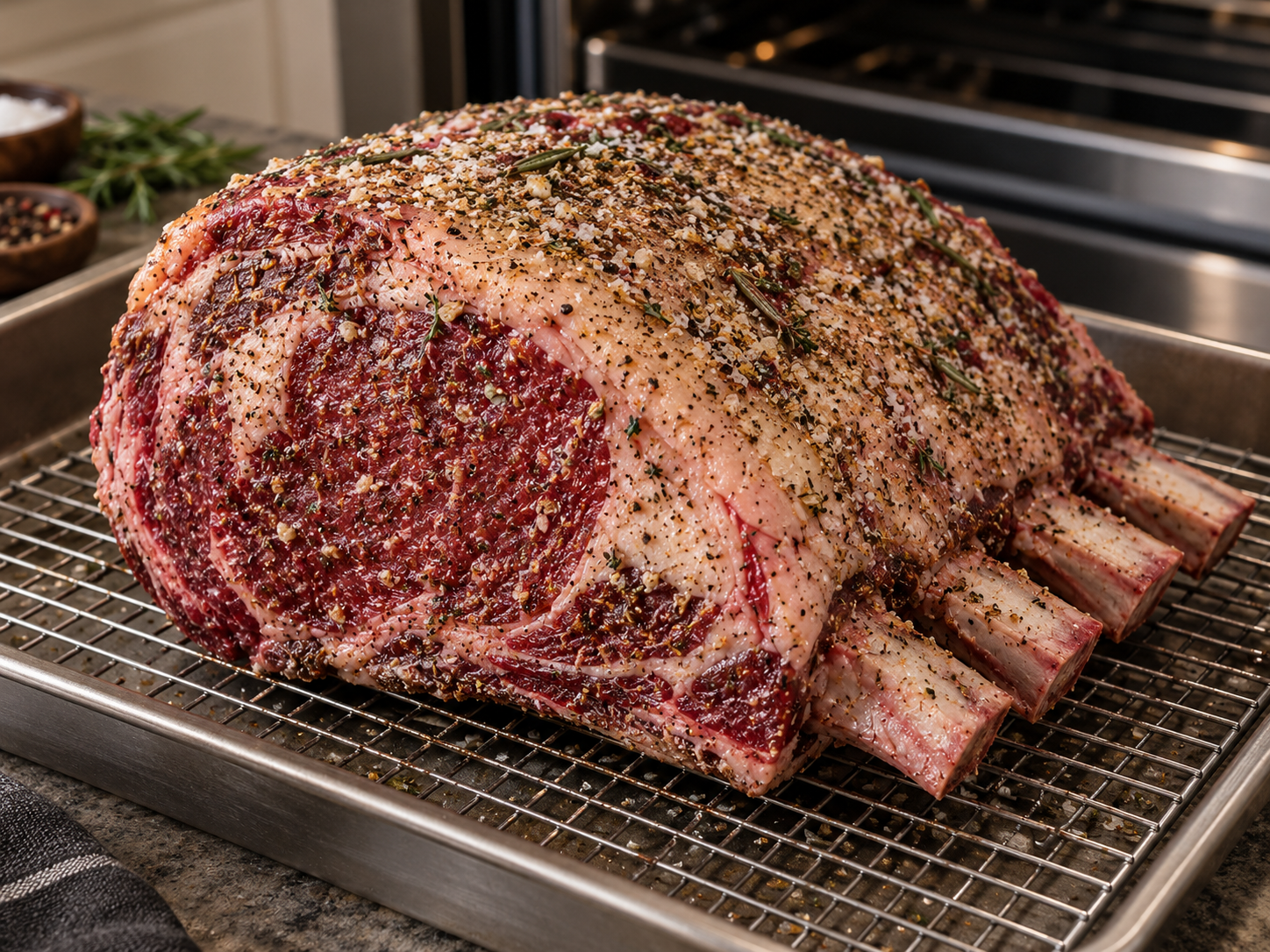
Salt the prime rib 24–48 hours before cooking and refrigerate it uncovered. When you're ready to cook, preheat your oven to 475°F, season the roast, and place it fat-side up in a roasting pan.
Cook at 475°F for 15–20 minutes to develop the crust. Then lower the oven to 250°F, insert a probe thermometer into the thickest part of the roast without touching bone, and continue cooking until the roast reaches its pull temperature.
For medium-rare, pull the roast at 115°F. Let it rest for 20–30 minutes before carving.
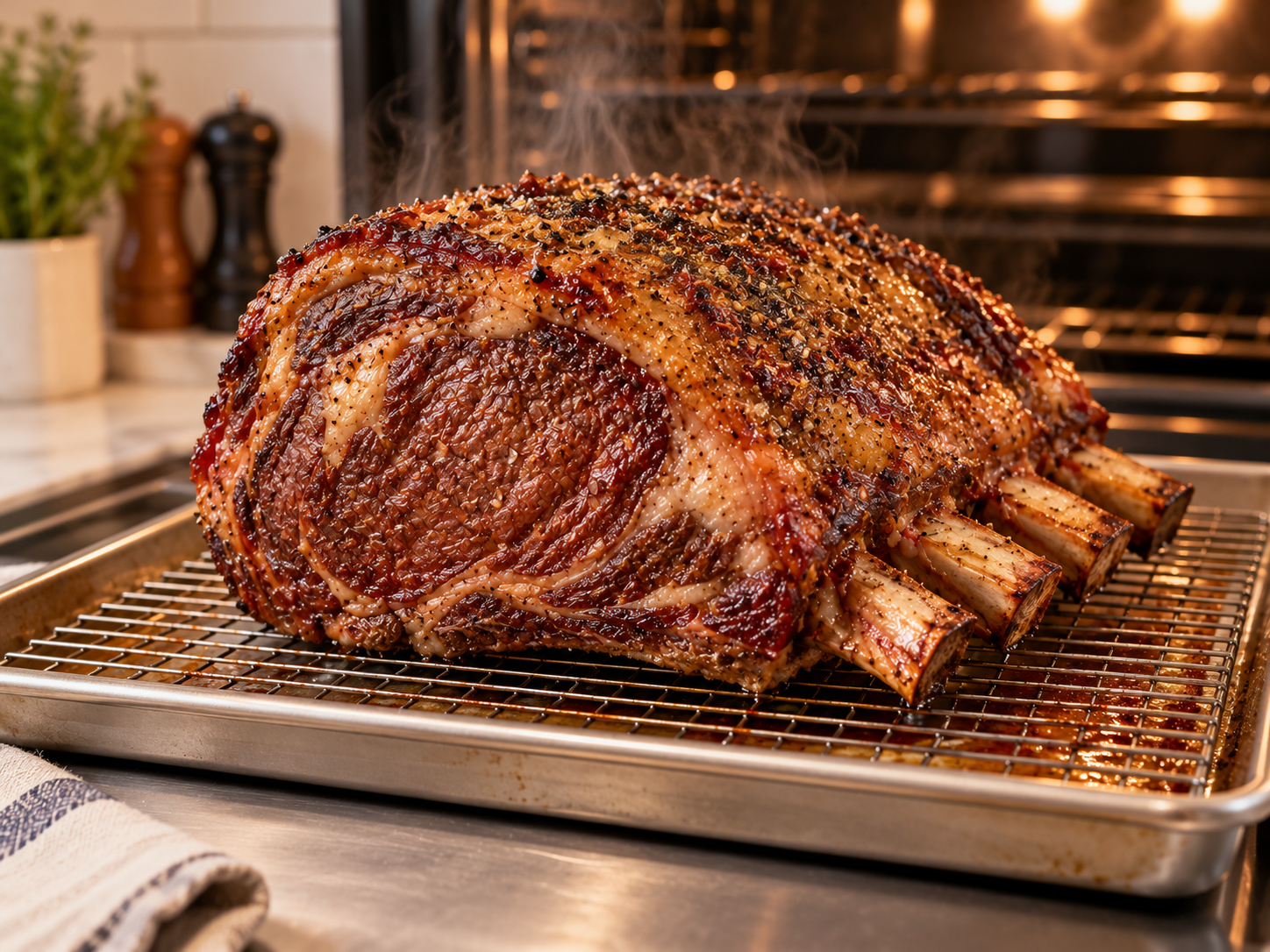
Step-by-Step Prime Rib Instructions
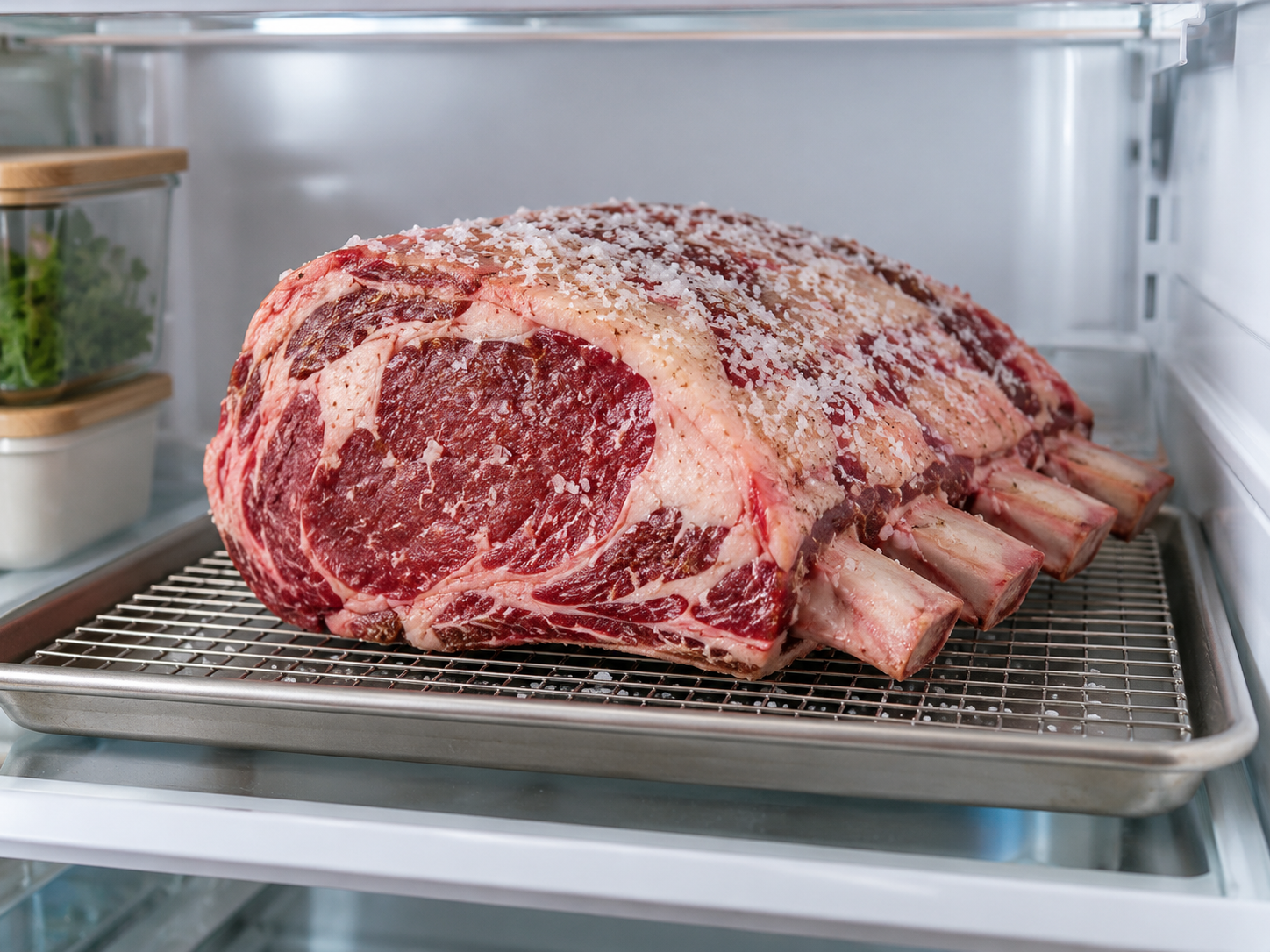
- Salt the roast 24–48 hours ahead and refrigerate uncovered.
- Before cooking, season with black pepper and any garlic, herbs, mustard, or other seasonings you prefer.
- Preheat the oven completely to 475°F.
- Place the roast fat-side up and cook for 15–20 minutes.
- Lower the oven temperature to 250°F.
- Insert a probe thermometer into the thickest part of the roast without touching bone.
- Continue roasting until the center reaches the appropriate pull temperature.
- Remove the roast from the oven and rest for 20–30 minutes.
- Carve and serve.
That’s it. Don’t make it harder than it needs to be.
What Temperature Should You Cook Prime Rib To?
For medium-rare Certified Piedmontese prime rib, we recommend pulling the roast at 115°F and allowing it to rest toward a target temperature of approximately 125°F. Our rule is to pull the roast about 10°F before your target temperature to account for carryover cooking.
| Doneness | Pull From Oven | Target Temperature |
|---|---|---|
| Rare | 110–115°F | 120–125°F |
| Medium-Rare | 115–120°F | 125–130°F |
| Medium | 125–130°F | 135–140°F |
If you want our preference, aim for the lower end of medium-rare: pull at 115°F for a target around 125°F.
Put the thermometer into the thickest part of the roast without touching bone. Start watching it early. Once a roast is overcooked, there’s no fixing it.
Why Does Certified Piedmontese Prime Rib Need Careful Temperature Control?
Certified Piedmontese beef is leaner than heavily marbled beef while still being exceptionally tender, which makes temperature control especially important.
Piedmontese gets much of its tenderness from the breed's genetics rather than relying on large amounts of fat. That’s part of what makes the beef different, but for the person standing in front of the oven, the takeaway is simple: don’t overcook it.
Use the clock to estimate when dinner might be ready. Use the thermometer to tell you when the beef actually is.
Want to Know Why Piedmontese Is So Tender?
Piedmontese is unusual because it can be remarkably tender without depending on heavy marbling.
Read — What Is Piedmontese Beef?
How Long Does Certified Piedmontese Prime Rib Take to Cook?
Plan on approximately 25–30 minutes per pound at 250°F after the initial 15–20 minutes at 475°F. This is a planning estimate, not a guarantee.
Every roast is a little different, and ovens vary. Start earlier than you think you need to and begin watching the internal temperature before the estimated cooking time is up.
It’s easy to give a roast another 15 minutes. You can’t take 15 minutes of cooking back.
Plan with the clock. Finish with the thermometer.
475°F: 15–20 minutes
250°F: approximately 25–30 minutes per pound
DONE: when the thermometer reaches your pull temperature
Roast shape, size, oven accuracy, starting temperature, and other factors can change cooking time.
Should You Salt Prime Rib the Day Before?
Yes. Salt your prime rib 24–48 hours before cooking and leave it uncovered in the refrigerator. This gives the salt time to season the beef and helps dry the exterior so you get better browning when the roast hits the hot oven.
Before cooking, season the roast however you like. Black pepper, garlic, rosemary, thyme, mustard, and other herbs and spices can all make a great crust on prime rib. A simple salt-and-pepper roast works, but there’s absolutely nothing wrong with building a flavorful crust around the outside.
The important part is getting the salt on ahead of time. After that, make the crust your own.
If you forgot to salt the roast the day before, don't panic. Season it before cooking and move on.
How Long Should Prime Rib Rest Before Carving?
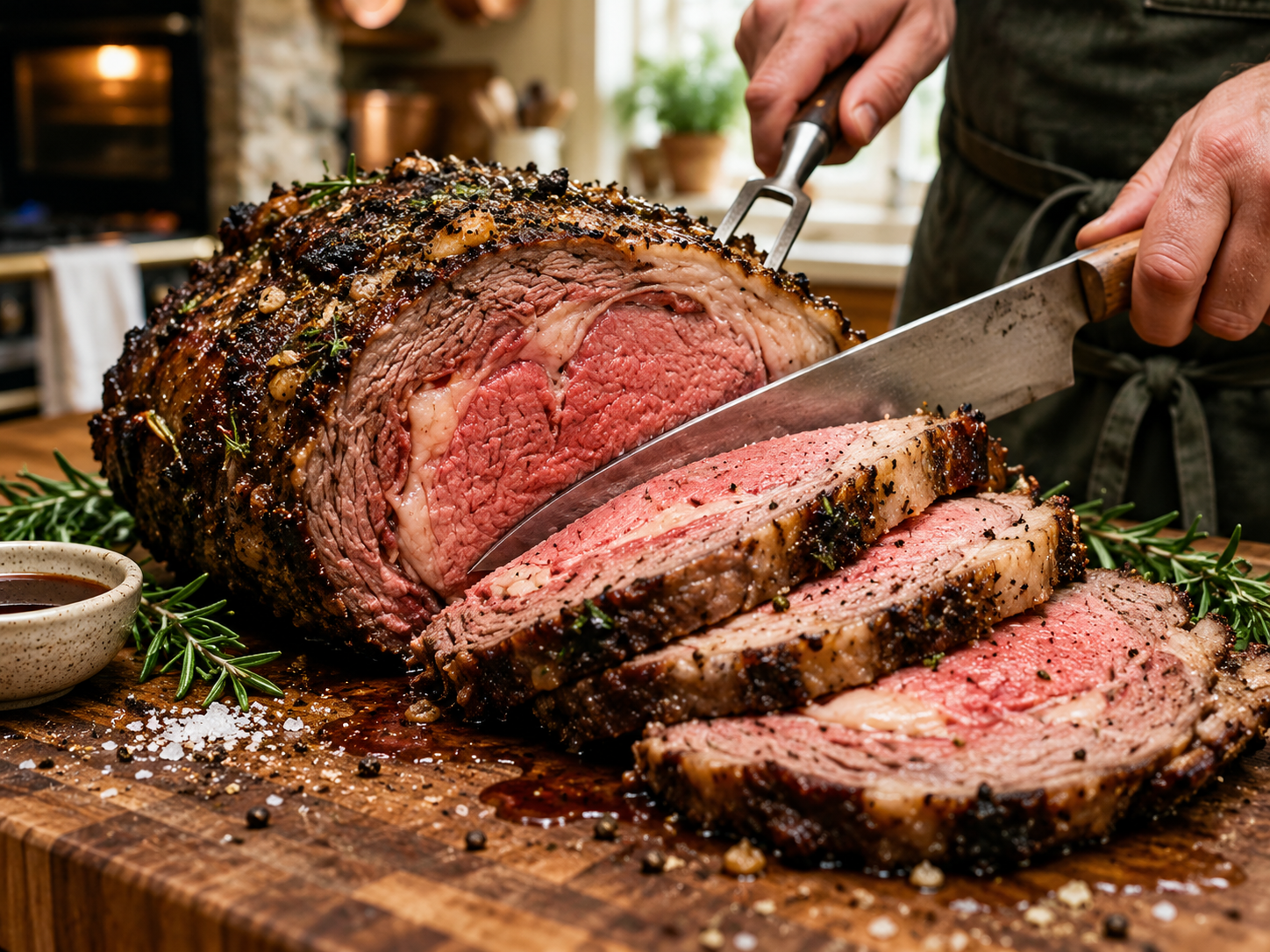
Let your prime rib rest for 20–30 minutes before carving. This resting period is when carryover cooking helps move the roast from its pull temperature toward its final target temperature.
Once rested, remove the rib bones as one section and slice the roast across the grain into the portions you want. Don't throw the ribs away. There's plenty of good eating left on them.
Give Yourself More Time Than You Think
The easiest way to make a holiday prime rib stressful is to start too late. Give yourself more time than the estimated cooking time says you'll need.
A roast doesn't know what time you told everyone dinner would be. Its size, shape, starting temperature, and your oven can all affect how long it takes.
If it needs more time, let it cook. Don't crank up the oven because everyone is getting hungry. Watch the thermometer and trust the process.
Being a little early is a much easier problem to solve than being an hour late.
Questions About Your Holiday Prime Rib? Call Us.
If you bought your Certified Piedmontese prime rib from Prescott Meat Company and you're unsure about something, call us before you start guessing. Tell us the size of your roast, what time you want to eat, and how you want it cooked. We'll help you work through it.
That's part of buying meat from a butcher shop.
We don't just want you to leave with a great piece of beef. We want you to cook it well, put it on the table, and understand why you bought it in the first place.
A better eating experience.
Certified Piedmontese Prime Rib FAQs
Answers to questions we hear at the counter.
Make This Year's Prime Rib Worth Remembering
Start with Certified Piedmontese beef, cook it carefully, and let the thermometer do the hard part.